
Sanford Country Club
A true New England test in Southern Maine
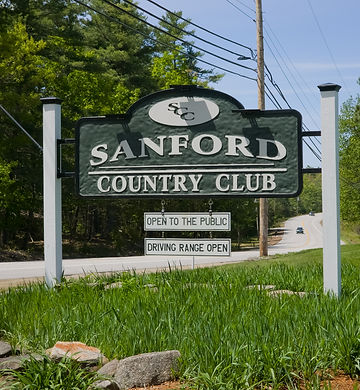
Just over the New Hampshire border in Maine exists a collection of wonderful, diverse golf courses open to the public. One of these is set to test the best of Maine’s amateur players in 2026, and that is Sanford Country Club in Sanford, Maine.
Sanford Country Club has the distinction in 2026 of being the only course the public can play that will be hosting a statewide men’s amateur championship in the New England region. The course shines as an example of everything one would think of as a strong test of golf in the northern half of New England. It combines elements of natural and uneven lies, rolling and sometimes major changes in elevation, and sometimes major precision from the tee. These features, plus fast greens and taxing rough, will surely make it a strong layout for Maine’s finest competitors.
The opening hole is a par 4 that features and elevated tee shot down to a rolling fairway that moves straight at first, then down and to the left. The entrance to the green is somewhat generous and is certainly the preferred place to miss, as anything from the back of the green runs away from the player and will be hard to stop short.

Hole #2 is also a par 4 running in the opposite direction from the first. It is shorter in length, but it forces the player to hit uphill to a fairway that slopes greatly from left to right, forcing fades down and into the rough. The left side of the hole is guarded by thick native grass and mounds but must be challenged. The bunkers at this sloped green are deep and well placed and hitting out of them requires care to start the ball high enough on this sloped green.

The third hole is the first par 3 hole, and it plays quite long and downhill to a large green with many places for challenging pin placements. Coming into this green with a high fade will require complete confidence in doing so, as a large tree looms perfectly just to the left. Depending on the hole location, even missing in the preferred spot could present a test of focus to make par, but going long here is simply not an option.

Following the demanding third hole is the first of consecutive par 5 holes on the Sanford front nine. Hole #4 is one of the most extreme right-to-left holes one will encounter perhaps anywhere in New England, with a dense lateral hazard following the routing of the hole all the way on the left side. The tall trees make it extremely difficult to cut the corner of the dogleg, and care must be taken to ensure the ball doesn’t run through the fairway. A layup well short can result in the ball above or below the player’s feet, and with the hazard, rough, and bunkers left, it can present a challenging third shot.

The fifth hole is also a par 5 and runs beautifully uphill, guarded on both sides by dense rows of trees. At the top of the hill, the green is situated well off to the right, so any second shots that come up short are best hit carefully to the left to present a view of the putting surface for a short pitch. Anything too far right could be blocked out by tall trees, and the undulating green is also protected on the right by a large bunker.
Perhaps the course’s signature hole, the marvelous sixth presents a demanding tee shot that plunges into a deep valley. Hitting the fairway on this hole is of critical importance, and it is easy to see why. The left and right side of this hole is protected by thick rough and two large trees, and the green is placed at the top of a steep, massive hill with a small creek running across its base. To make the extremely uphill approach more interesting, the green is perhaps the most intricate and unique on the course, featuring a small punch-bowl section front right and another large, sloped section back left. Missing on the wrong section of this putting surface will present a two-putt scenario and will make for tremendous tournament setup opportunities.


The front nine continues to present demanding asks from the tee and the seventh is no exception. The fairway of this hole is basically an island, as a continuous water hazard wraps nearly entirely around its boundary, with its furthest side still being will protected. A challenge of the hazard long and right leaves a fairly flat and shortest possible approach, but the green is once again well elevated and guarded by large bunkers. Long, again, is simply not an option.
Hole #8 is a short par three that falls well down the hill behind the seventh green. A large pine looms to the left not far off the tee, and depending on the tee placement, should be respected. Hitting this green is paramount, as it is guarded on all sides by lateral hazards, a significant bunker, and difficult rough.
Closing out the front nine is the magnificent and demanding ninth hole. This long par 4 plays every step uphill with a true roller coaster fairway that undulates up and down several times and with considerable slopes. The slopes in front of the green present demand a truly pure approach shot from many difficult lies, and the putting surface is also quite challenging. Ending the font nine with a four here should be a tremendous boost of confidence in a tournament round.


The front nine of Sanford Country Club was built in the 1920’s, and it was not until the 1990’s that the course was expanded to the full 18-hole layout that exists today. The back nine presents many unique challenges and is every bit as demanding as the front nine, and wastes no time in testing the player.
Short par 4 four holes kick things off on holes 10 and 11. The open nature of the undulating 10th hole can certainly mean that wind is a factor to consider off the tee, and the fairway here is by no means generous. Missing it requires a shot out of dense rough to an elevated green, and this rough plus a large bunker left continues up to the green and surrounds it entirely.

Hole #11 presents one of the course’s most interesting opportunities from a setup perspective off the tee. Two tee boxes are set well apart from each other with roughly the same total yardage to the green. One presents a decently straight shot up the fairway, while the other sets up hitting at an angle with the green well off to the right. For either side, missing well right is quite troublesome, and the approach shot to this tilted green is well elevated once again and guarded left by a deep bunker and rough.

Hole #12 can be played as one of the most substantial par 5 holes in the area, with it capable of being stretched out to over 600 yards in total length. From all the way back, the tee shot is framed by trees, and the rough short of the fairway includes several large stones right in the player’s view. Pinching in the fairway is also a large stone surrounded but rough and other thick grasses, presenting a unique hazard that might, in many situations, otherwise be a bunker. This stone, however, carries major significance to the course and its membership, as it is dedicated to honorary lifetime member Don Cole.


As the twelfth hole progresses on its tremendous routing, the fairway begins to move sharply to the left and downhill. The entire left side of this hole is guarded by lateral hazards, and any layup shots can easily run through the fairway on the right in misjudged. The green is placed even further left at the bottom of the hill and is wonderfully framed by standalone trees left and right.

Hole #13 is a short par 3, featuring a two-tiered green placed right in front of a water hazard, forcing the player to carry the ball all the way to the green. Anything even just short of the putting surface will require some luck to stay up and out of the water and finding the right tier here can mean all the difference in the world.

The par 4 14th hole from the tournament tee is a long par 4 hole featuring a hard dogleg moving to the right and a well elevated tee box. A single lone pine tree is placed beautifully off the fairway at the outside corner and can serve as a great target to start on for a power fade around the bend.

The final four holes at Sanford are a true test of patience and focus. This stretch, beginning with hole #15, starts with a long uphill par 4 that moves will to the right. The tee shot here demands everything the player can muster to shorten the approach shot to an enormous green with many challenging slopes. The expansive putting surface presents many opportunities for tournament pin placements, and bunkers and thick rough can make a par quite challenging from a miss anywhere.
Hole #16, like the 3rd, is a long downhill par 3 and the last par 3 hole on the course. While the large green may seem like an easy target, it feels quite small when one realizes all the trouble the green is surrounded with. Any miss well to the left brings a lateral hazard in play. Anything well long leaves a trick pitch or even a lost ball, and too far right brings a tall tree into play and challenging areas to chip or pitch from. The best miss may be the long cross bunker in front of the green, which could still leave a long sand shot depending on the pin location.
The closing gauntlet continues with the par 4 17th. Playing entirely uphill, the tee shot calls upon every last bit of the player’s strength to advance the shot to just right of the center of the fairway, as the hole moves additionally from right to left. Focus must be maintained on the approach shot, and the decision to favor the left side of this green is of major importance as thick rough and a deep bunker protect the right side quite well.
The round at Sanford Country Club closes in tremendous fashion with one final par 5. The tee shot from the tournament tee at the 18th is somewhat blind and moves downhill to a sweeping fairway moving from right to left. A significant portion of the left side of this hole is heavily guarded by a standalone stretch of everything from tall dense trees, stones, and native vegetation. Players looking to go for the green here in two must favor the right side of the hole, but care should be taken not to run through the fairway. The approach to the elevated green surrounded by rough and bunkers is incredibly rewarding to perform successfully and is a perfect closing shot to a spectacular test.

Sanford Country Club is a course that embodies everything that is special about golf in New England. Its undulating fairways, use of the natural topography it is built on, its diverse set of greens, and challenging rough demand the player’s full attention and energy. Each hole is so unique from the one before it, and each one can be recalled so easily from playing the course only once. It will surely serve as a tremendous test for Maine’s finest amateur competition and is well worthy of a spot in any player’s calendar, this year and beyond.