
The 2026 Northeast Amateur Invitational
A tour of Wannamoisett Country Club and this year's results.
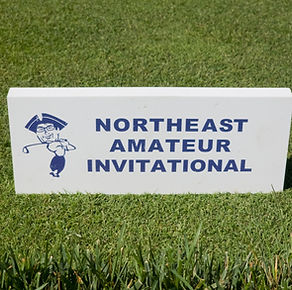
This past week, the Northeast Amateur Invitational Tournament was staged at the Wannamoisett Country Club for the 64th time. This event is one of the most special amateur golf tournaments in the United States, and perhaps the most substantial tournament, amateur or professional, that is held in the New England Region.
The field consisted of many of the world’s top amateur players, and included junior, college, and mid-amateur players in terms of age ranges. Some of the key players in the field included the junior players Miles Russell and Tyler Watts, Mason Howell (2025 United States Amateur Winner), Josiah Gilbert from Auburn University, and Stuart Hagestad (mid-Amateur, multiple-time Walker Cup player).
Additionally, several New England players found themselves in the field as a direct result of winner their state amateur championships. These included Ryan Downes from Massachusetts, Michael Walsh from Vermont, Adam Friedman from Connecticut, Josiah Hakala from New Hampshire, Eli Spaulding from Maine, and Mike Calef from Rhode Island. Other New England Players, such as Matt Parziale and Bradley Sawka, were also present.
Wannamoisett Country Club is one of Donald Ross’s finest designs in the New England region, and is famous for its exceptional par 3 holes, large and tremendous greens, elegant bunkering, and playing as a par 69, with its 17th hole being its only par 5.
The first hole on the course is a 430 yard par 4 that plays uphill and over a large pond shared by the neighboring 9th hole. A beautiful fairway bunker comes into play on the left around the 290 yard mark and requires around 320 yards to fully clear. The green introduces the players to what they will see throughout the round, and presents a large putting surface with many alternating slopes guarded by bunkers with tall faces.


At 505 yards, the second hole plays in the opposite direction along the left side of the first hole. This par 4 features plenty of trouble right to punish a weak fade, including trees, thick rough, and a strategic fairway bunker was well in play for the field of this event. The approach into this hole is one of the most visually impressive of the course and forces the player to consider a stretch of rough, a creek lined with thick tall fescue, a sloped green, and formidable greenside bunkers.


It is nearly impossible to finish up the second hole without glancing at the green on the 3rd hole, perhaps the course’s most famous hole and one of New England’s most celebrated part 3 holes. Typically playing under 150 yards, the design of the hole is truly spectacular, featuring a large bunker cut into its left side and running around the front, and a steep slope with a small area of short grass and a dangerous lateral hazard to the right. Birdie is well in reach with a good shot, but the green simply must be found here.


The par 4 fourth hole features an uphill, right-to-left design that favors a draw for right-handed players, and is the number one handicap hole. While a fairway bunker on the left may not be in play for the players, too far left is no good, with residential areas just beyond the trees. The green of this hole is quite interesting, with two pointed sections front-left and front-right.
It is at this point in the round that a fascinating feature of Wannamoisett is introduced. Just mere steps left of the green is the fifth hole tee box, and the areas in between are greatly sloped and cut quite short. Missing there leaves a tricky situation for an up-and-down chip. This feature is repeated on more occasions throughout the round.
The fifth hole is a short par 4 that moves quite sharply from left to right. While setting up well for most players in the field, it is easy to forget that the right side of the hole is well guarded by a series of beautiful fairway bunkers, mounds, and rough. The approach to the green on this hole is all uphill to a beautifully perched green with two flanking bunkers on each side, which, depending on the day’s hole location, could easily need to be carried depending on where the player’s tee shot finished.


Hole #6 is a 437-yard par 4 that moves slightly right to left. While the left side bunker needs only about 250 yards to carry, a precise drive of at least 300 yards is needed to comfortably carry the bunkers and rough on the right. Players finding these right-side bunkers and rough found themselves in tough situations, routinely not hitting the green on the second shots and finding themselves in the deep bunkers guarding the green.


Running alongside the sixth in the opposite direction is the exciting par 4 seventh. At just 345 yards, most players opted to see how far up to the green they could push their tee shots to, with a wide variety of results, from coming up just short in front to a sloped pitching area, to the hole’s deep greenside bunkers, and sometimes in the rough as well. The green is an interesting triangle shape, and when the hole is placed in the back section, there is the smallest amount of space left and right. While not a factor for the competition, the hole also features a rolling fairway and tremendous bunkering left and right of the fairway.


Wannamoisett’s second par 3 hole is the eighth hole. Considerably longer than the third hole, it is also once again a truly spectacular display of bunkering, featuring a giant, intricately shaped bunker short-left, a smaller one short-right, and a deep, elongated bunker guarding the entire right side of the substantial green. The third hole is most certainly deserving of all of its attention, but this hole, and, as it will be seen, the additional par 3 holes, are truly exceptional.

The ninth hole is a 453 yard par 4 that plays back towards the clubhouse. It plays directly alongside and in between the neighboring first and tenth holes, and the left side is guarded by several fairway bunkers, trees, and thick rough. The second shot must not only carry a water hazard, but an enormous and steep slope protecting the front of the green. It is a stunning visual to close out the front nine, and is the first of perhaps the two most memorable consecutive second shots on the golf course.

Going into the back nine, the tenth hole is perhaps, from an architectural standpoint, the finest on the course. This hole, a 421 yard par 4, moves beautifully uphill and moves slightly from right to left. On the left side of the hole, two significant fairway bunkers and a collection of several rough covered mounds require a carry of about 270 yards to manage safely, but a bunker in the center of the fairway at around the 300 mark needs to be factored in as well from the tee.
Assuming these two hazards are dealt with, the approach to the elevated green is protected by two incredible bunkers, with the one on the right being embedded into the hillside and features a large mound just to the right of it. The green sits just up and over the slope of the hill and flows beautifully into the hollow at the hill’s highest point. Just left of the green is a large standalone mound, an interesting element to a truly special golf hole.

The eleventh hole moves back down the hill in the opposite direction from the tenth. A combination of bunkers, more rough covered mounds, and a stout tree are presented to the player on the tee shot, and the large flowing green features a beautiful bunker that cuts across the front.

Hole #12 is the first par 3 on the back nine, and it is a true masterpiece. Playing well over 200 yards and completely uphill, this hole features a massive greenside bunker that from its most extreme points measures around 35 yards long, and it is also exceptionally deep with and intimidating face. If this wasn’t difficult enough to navigate, the green at the top of the hole is bowl-shaped with varying slopes on the right, and tilts back to front. Players having to chip or putt from the back of or behind the green faced incredibly difficult situations to make par with and often made bogey.



The 13th hole offers a slight breather after the challenge of the twelfth. This short par 4 moves slightly from left to right, and the primary concerns off the tee are the large collection of mounds in the left rough and a bunker that is certainly reachable with driver for the players in this competition. This green on this hole features a familiar element of the fourth hole, where just to the left is the 14th tee box and a sharp gully in between. Players needed to keep this in mind when the flag was in the back left corner.

Hole #14 features perhaps one of the more interesting risk-reward setups on the course. The hole’s fairway is routed from left to right around a large pond, but the green is roughly 320 yards away as a straight shot across it. Players that decided to take the hole on needed to calculate carefully as to not go through the fairway into the rough, which routinely led to delicate pitches over the greenside bunker on the left out of very thick rough, making par a decent grind. A shot of 250 yards to the left in the fairway leaves a relatively straightforward approach but still requires focus.


The final par 3 hole on the course is the 15th. Playing long and uphill like the 12th, it features a considerable slope at the front of the green and is further guarded by beautifully staggered bunkers surrounded by rough and tight pitching areas. The hole played right into the wind in the closing stretches of the final day, causing players to miss the green and take on challenging short game shots to make a three. It is the final example of how masterfully Donald Ross designed the short holes on this incredible layout.

The long par 4 16th hole is the second handicap hole on the course. The hole starts out straight, then moves to the left starting at around the 300-yard mark. From this point to the green, the left side of the hole is well guarded by thick rough and a massive tree. A large bunker cuts across the front of the green to prevent any run-up shots from making the putting surface if the tee shot ends up in the left rough. The green is quite large and is tucked away into the very corner of the property, with a street intersection just beyond the fence.

The course’s lone par 5 hole is the 17th, which measures around 560 yards. A residential road runs along the entire left side of the hole just beyond the trees that line it, and the pond from the 14th hole is out on the right side. The hole begins to pinch in around the 320 yard mark by a tremendous fairway bunker, which runs up the right side of the hole and then comes into the center, nearly joining another bunker on the left. The green is once again quite large, and considerably so from front to back. Getting on in two shots requires carrying two bunkers that narrow the opening to the green considerably and staying away from two additional bunkers and rough that run along the left and right sides. Long here could end up on the final tee box.


The 17th is strategically designed as the only par 5 hole of the par 69 layout, and gives competitors one major final shot to pick up one or even two shots coming home. The final hole at Wannamoisett is a 456 yard par 4 that moves somewhat sharply from right to left. Players looking to shorten the hole face two back-to-back bunkers and trees that require around 300 yards to safely clear.
Shots pushed well to the right require a bit of luck to avoid two more bunkers and several trees, but could easily result in a punch shot back out to the fairway. The green features some interesting slopes throughout its considerable footprint, and the hole plays as the fourth hardest on the card. It is a wonderful finishing hole on a masterful Donald Ross layout.

The winner of this year’s tournament was the junior competitor, Tyler Watts. Watts put on a near singular performance during the week, shooting rounds of 66, 60, 69, and 65. His 60 in the second round set the new record for a single tournament record at Wannamoisett, and overtook the first round 61 shot by Carson Bertagnole on the first day of the event. He would begin the final round with a four shot lead of Stanford University’s Jay Leng, Jr. Leng would keep pace on the day with Watts with a final round of 66.

Watts and Leng both made bogey on the par 3 12th hole by going to the back and long of the green. Leng then went on to make consecutive birdies on the 13th and 14th holes, putting some pressure on Watts who made par on those holes. Both players missed the green on the 15th in a heavy wind but managed to make par. The tournament was all but assured for Watts after rolling in a birdie putt of considerable length on the 16th, and the round concluded with both players making birdie and bogey on the 17th and 18th holes. Watts is the youngest ever winner of the tournament, and he is ranked fourth in the world in the amateur rankings as of the publication of this article.
Of additional note, Carson Bertagnole fumbled slightly after his first round 61 with rounds of 69 and 71 but finished strong with a 65 of his own on Saturday to secure a T3 position. Miles Russell followed up his runner up performance from last year with a T5 finish this year. Hayes Brown captured the Joseph J. Sprague Award as the field’s low mid-amateur player, beating Stuart Hagestad who also made the cut, and shot an incredible 63 on the second day. Unfortunately, none of the New England natives in the field made the cut, with Bradley Sawka and Bradford Tilley from Connecticut finishing the best of the contingent with scores of +5 after three days.
The Northeast Amateur Invitational Tournament continues to deliver as one of the most exceptional amateur tournaments in the whole of the United States. It is one to put on the calendar to see some of the world's most exceptional players navigate a true New England gem. Be sure to attend next year. You will not be disappointed.